Monday, 3 June 2019

iPadOS 13 Adds Mouse Support to the iPad as Accessibility Featur


As a leak had previously suggested, iPadOS 13 brings USB mouse support to the iPad. Apple has added it to the OS as an AssistiveTouch feature.

This means that like other AssistiveTouch features, connecting a USB mouse to your iPad running iPadOS 13 will show a black touch target simulating a finger touch.

This means as you move the mouse around, it will scroll through lists and you can click on an item to simulate a tap. As developer Steve Troughton-Smith notes, the feature even works with Apple’s own Magic Mouse.


Steve Troughton-Smith


@stroughtonsmith

Hello mouse support on iOS 13! It’s an AssistiveTouch feature, and works with USB mice. @viticci nailed this

2,587

10:05 PM - Jun 3, 2019

1,083 people are talking about this

Twitter Ads info and privacy

The feature works with both wired and wireless USB mouse. If you own a wireless mouse, you just need to plug in their USB receiver to your iPad or iPad Pro running iPadOS 13.

Apart from USB mouse support, iPadOS also brings native support for external USB drives and cameras to the iPad. The enhanced Files app in the OS can natively read pen drives, cameras, and external hard disks, and you can even import photos directly to Lightroom or any other photo-editing app of your choice from external storage. The new Files app also has support for SMB and iCloud Shared folders which makes file management easier on an iPad.Also Read:Free Online Movie Streaming Sites in 2019

Also Read:log out of Facebook Messenger

Also Read:Free Audio MP3 Cutter apps


The move to add support for USB mouse and external storage means that Apple could potentially add support for more USB devices to iPadOS in the future.

Thursday, 30 May 2019

Which Way to Transfer Files Is the Safest One?


There are plenty of ways to transfer files for various purposes, both personal and professional. However, as soon as you decide to put up your files for download, you’re introducing several cybersecurity risks that you may not have thought about. With that in mind, what are your options when it comes to file transfer online?


1. Snapchat

The popular chat program comes with an option to send photos that self-destruct after a set period of time. However, this is only true in theory. In practice, the recipient might as well take a screenshot of the photo before it self-destructs. While the app does notify you about it, it’s not of any help if you want to use the feature as it was intended. Furthermore, there is a copy of the image that’s stored on Snapchat’s servers for archival purposes. So whenever you’re using Snapchat, you need to be aware of these things and decide whether you’re comfortable with them or not.
2. pCloud


If you don’t want to send an attachment through email, pCloud is a great way to get the job done. Some email providers like Gmail limit the total size of attachments per email to 20 MB, which is sometimes not enough to transfer everything you’d like in one go. With pCloud, there are no known limitations. It’s a good thing that the platform is accessible from any operating system of your choice. Now, for the drawback; there is no encryption unless you purchase a $4.99 monthly subscription. But either way, the files you upload automatically self-destruct after a certain period of time, so there’s no need to babysit them.
3. Email

Ah, the good old email. It’s been around for decades, and everyone knows how to use it. It allows you to send text messages and attach files for the recipient to see. There’s just one problem; the contents may get intercepted on the way if you’re not careful enough. If you’re connecting to the internet through a risky hotspot, this is exactly what might happen. There are multiple ways on how to deal with the problem. The first option is to use a VPN (a virtual private network). If you do, no one will be able to snoop on the files and messages you exchange with another person because all the traffic you send or receive will be routed through an encrypted tunnel. The second option is to encrypt the attachments themselves. This, however, does not protect the content of the messages. Also, you’ll need to find a way to get the password to the recipient separately.
4. OTR

Linux users are more than aware of Pidgin, a messaging platform that often comes pre-installed on the OS. It’s cross-platform too, so it’s easy to chat with someone who’s using a different OS. The best part about it is OTR (off the record) messaging feature. It encrypts all the messages that get sent from your machine, so you don’t have to worry about man-in-the-middle attacks. But again, if messing with extra plugins is not your cup of tea, you can also choose to always use a VPN while you’re chatting online, which is another great way of making sure that no one is intercepting your messages.
5. SFTP

Are you an old-school type who loves to fiddle around with servers? Then SFTP is another option in your arsenal. It’s like FTP, but with an extra bit of security added on top of it. Still, to utilize it for file transfer, you’ll need a server first. Getting one just for that purpose and leaving it sitting is probably a waste of your resources, not to mention the fact it requires a little bit of technical knowledge to set up. But if you already have a server available, you might as well utilize it for sending files. Obviously, the risk here is that anyone can access the files you uploaded as long as they know the exact URL. Moreover, if hackers get inside your hosting account, they will obtain access to everything you’re storing there.Sponsor ads:

Gihosoft RePicvid Free Photo Recovery Software provides a free photo recovery software for windows to help users recover the deleted or lost photo for free.

If you lost data after you updated to a new iPhone, you can always use Gihosoft iPhone Data Recovery to get the data back from the old iPhone or backup.You may also like: iphonerecovery.com

If you use android phones, please choose Gihosoft Android Data Recovery.With Gihosoft Android Data Recovery, no longer afraid of data loss!

iPhone Manager:Get the ultimate Gihosoft iPhone Manager. Free download for PC/Mac.


Conclusion

In the end, no way of transferring the files online is 100% secure. But if you learn the risks associated with each of the options, you can mitigate them and choose a method of transfer that works best for the situation at hand.

Friday, 24 May 2019

iFixit’s 2019 MacBook Pro Teardown Reveals Minor Changes to Butterfly Keyboard Material


Earlier this week, Apple announced a surprised 2019 MacBook Pro refresh with the focus primarily being on faster 6-core and 8-core Intel processors. There was another smaller change that Apple did not even talk about in its press release — a more reliable butterfly keyboard.

Apple said that it is using newer materials for the butterfly keyboard on the 2019 MacBook Pro which should make it more reliable in nature.

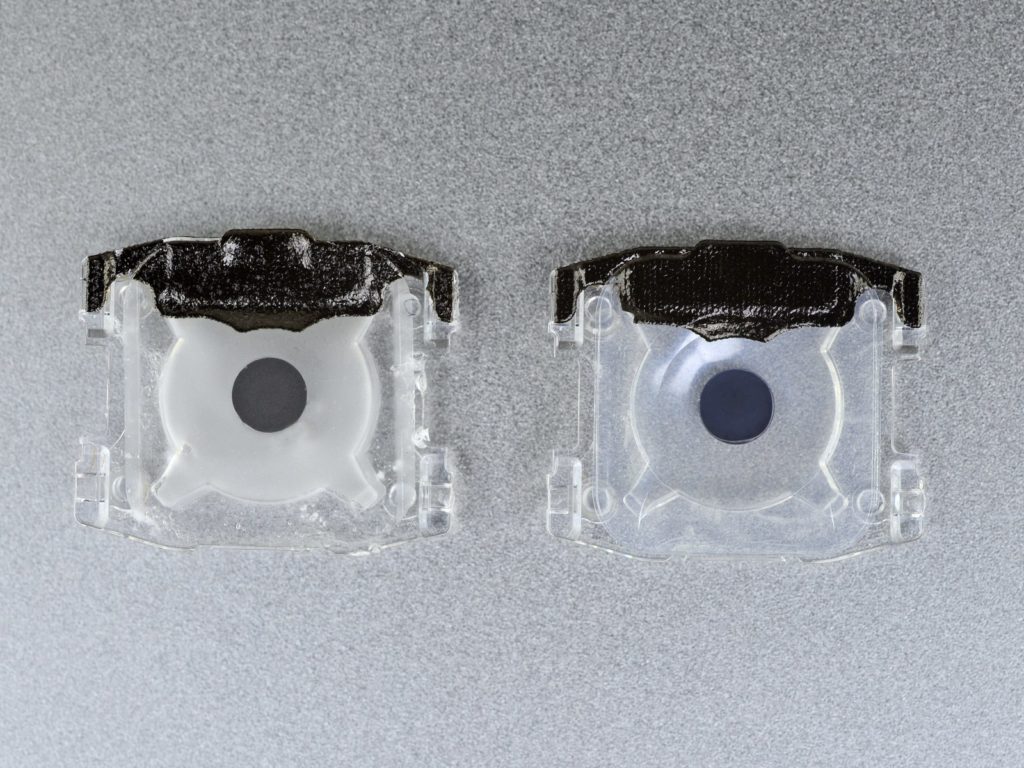
A teardown from iFixit has now revealed what underlying changes Apple has made to its butterfly keyboard. The design of the dome switch has been updated and there is a new clearer material for the keyboard cover switch. The older one was semi-opaque, “somewhat tacky, and feels like silicone.” The new material is “clearer and smooth to the touch.” Based on an FITR analysis, the new material is nylon while the older material was a complex polymer.


The keyboard dome switch has also been changed slightly. Apple is seemingly “using a revised heat treatment, or alloy, or possibly both.” iFixit is unable to determine the exact changes with their current equipment and it requires a deeper analysis.

iFixit does attribute some of the reliability issues with the butterfly keyboard to the metal switches.

If anything changes about the dome—if it’s cracked or deformed—the key may behave erratically. Likewise, if the prongs break or bend, the key stops working.

Ultimately, Apple seems to have made some minor changes to the materials it is using to make the butterfly keyboard on the 2019 MacBook Pro. It is unclear if these changes will also be applicable on the replacement 2018 and older MacBook models which use the butterfly keyboard.

The bigger issue, however, is that just like previous MacBook Pro models, the 2019 MacBook Pro requires replacing one entire half of the laptop instead of just the keyboard if anything goes wrong with it. No wonder then that the 2019 MacBook Pro has received a measly repairability score of 1 out 10.
We Want to Hear From You

Are you willing to buy the 2019 MacBook Pro despite the unreliable history of butterfly keyboards? Or are you willing to wait and watch as to how the new butterfly keyboard holds up in terms of reliability before making a decision?

[Via iFixit]

Sponsor ads:

Also Read:Convert Picture to Watercolor Painting on Android?

Also Read:23 Best Vidics Alternatives for You to Watch movies/TV serials in 2019

Also Read:Fix “The program can’t start because api-ms-win-crt-runtime-l1-1-0.dll is missing”

Also Read:11 Best iPad Interior Design Apps to Decorate Your Home in 2019

Also Read:8 Best To-do List Apps on Mac to Easily Manage Your Tasks in 2019

Also Read:Best Free 4K UHD Video Player Software for Mac/Windows 10 in 2019

Also Read:iPhone Music Player Alternatives to Apple Music App in 2019

Thursday, 16 May 2019

Pwn20wnd Team Working on Major Update for Unc0ver Jailbreak for iOS 12 – iOS 12.1.2


Ever since the Electra team released Chimera jailbreak for iOS 12 – iOS 12.1.2devices, the @Pwn20wnd team has kept quiet. Today, the team has posted an update informing its followers that they are working on a major update for Unc0ver jailbreak and Cydia backend to make it more stable than before.

This is particularly important since Chimera jailbreak offers a more stable and bug-free experience to users which is why many have been preferring it over Unc0ver.


Pwn20wnd

@Pwn20wnd

We have been working on major updates for both unc0ver and Cydia’s backend, to make them incredibly stable, bug-free and fast like never before.


These updates are finally almost done and will soon be released to public :-).

2,487

10:10 PM - May 15, 2019

Twitter Ads info and privacy

630 people are talking about this

There’s no word from the @pwn20wnd team as to whether the update will also add jailbreaking support for iPhone XS, iPhone XS Max, and other A12 Bionic devices running iOS 12 – iOS 12.1.2. Apart from the stability issues, that’s one major disadvantage of Unc0ver jailbreak when compared to Chimera which supports jailbreaking all A12 Bionic devices running iOS 12 – iOS 12.1.2.

If you have already used Unc0ver to jailbreak your iPhone or iPad but are frustrated with the stability issues, this news might want to make you hold off from switching to Chimera. Ultimately, competition is a good thing as without the release of Chimera jailbreak, the @pwn20wnd team might have taken a wee bit longer to work on improving the overall stability of Unc0ver jailbreak.

Are you looking forward to this update for Unc0ver jailbreak? Or is it already working smoothly for you?

Also Read:10 Websites to Watch Indian Live Television

Also Read:10 Best FRP Bypass APKs to Bypass Google Account Verification on Android

Also Read:Top 19 Best Websites Like VipBox for You to Watch Sports Stuff in 2019

Also Read:6 Best Free Photo Editing Apps for iPhone/iPad (2019)

Also Read:hack facebook account

Also Read:free photo editing apps for iphone

Also Read:How to Call Private on Android – 4 Trusted Methods

Also Read:How to Encrypt External SD Card on Windows 10/8/7?

Also Read:8 Best Free Text Messaging Apps for iOS in 2019

Also Read:Unblock Demonoid Using Proxy and Mirror Sites List


Tuesday, 14 May 2019

Disney Picks up Full Control of Hulu


The juggernaut that is Disney is launching its own streaming service soon. Disney+ will launch later this year and cost only $7 per month. But while Disney+ will host content from brands like Marvel, Star Wars, Pixar, and more, it won’t be the right platform for all content. Which is where Hulu comes in.

Disney recently picked up a majority position for Hulu not too long ago. This meant it could launch even more content on the platform, including animated series based on Marvel characters like Howard the Duck, MODOK, and Ghost Rider, among others. But now Disney has negotiated a deal with Comcast, which sees Disney pick up full control of Hulu beginning today.

This is part of what’s known as a “put/call” deal. This means that while Disney is getting full control of Hulu today, that big things can still happen in the future. Specifically, this deal makes it possible for either Disney or Comcast to force a sale of Comcast’s remaining shares in Hulu in late 2024. Currently, Comcast still holds a 33 percent stake in Hulu.

Now, nothing is changing for NBCUniversal content (which is owned by Comcast) right away. For now, NBCUniversal’s content, including live shows, will still be hosted on Hulu and Hulu Live TV. That will change in late 2024, though, as Comcast will have the option of pulling that content and launching it on its own upcoming streaming service. NBCUniversal’s own streaming service was announced back in January of this year.

One caveat: Starting in one year, Comcast can actually start putting its owned content on the upcoming streaming service, which will reduce the license fee that Hulu has to pay.

What happens in 2024 will be the real kicker for Hulu (and Disney). We already know of several different Disney-owned properties that are coming to Hulu in the near future, and that will likely only continue as Disney looks to expand beyond what it can share on Disney+. Disney sees Hulu as a way to launch more adult-oriented content. Think Netflix’s Marvel series, Daredevil or Jessica Jones. Which is why Howard the Duck won’t be available on Disney+.

But if Comcast pulls all of its NBCUniversal content from Hulu in favor of its own platform in 2024, will Hulu still be a viable option for the millions of subscribers out there? It almost makes sense for Disney to try and keep third-party content on the platform. But of course, the streaming platform wars are in full swing, and we’re all faced with the prospects of having to subscribe to every single broadcaster and publisher under the moon to watch the shows and movies we want.

[via The Verge]

Note Tips: Top 3 Alternative Sites to TamilDbox 2019

Also Read:8 Best Chess Apps for iPhone & iPad 2019

Also Read:Recover Your Forgotten Apple ID and Password

Also Read:Top 5 Best Similar Sites to Kickass Torrents 2019

Also Read:10 Best Free Music Download Sites That Are Totally Legal

Also Read:12 Best Free Instagram Followers Apps for Android and iPhone in 2019

Also Read:How to Play Android Games and Run Android Apps on PC or Mac

Also Read:Top 5 Best Free File Encryption Software for Computer in 2019

Note Tips:Best 21 sites watch soccer live tv

Tuesday, 23 April 2019

Apple Launches New 'Apple TV' YouTube Channel


Apple has launched a new YouTube channel that's dedicated to its TV app, offering up trailers, behind the scenes commentary, interviews, show clips, and more.


Apple appears to have debuted the new channel, which was noticed this morning by MacStories, about a month ago. The channel seems to have launched when Apple announced plans for a revamped Apple TV app and a new Apple TV+ streaming service.


Quite a few videos have been uploaded, many of which are clearly labeled with titles like "Official Trailer," Interview," or "Clip."


Trailers for many popular upcoming movies are included, such as "The Lion King," "The Secret Life Of Pets 2," and "The Joker," along with clips and interviews from "Game of Thrones," "Veep," and more.


The channel features trailers for Carpool Karaoke: The Series, which suggests this is where Apple will share trailers for its original TV shows and movies as the Apple TV+ service's fall launch approaches.


Apple's updated TV app is already available to developers and public beta testers who have installed iOS 12.3 and tvOS 12.3, and it will be available to everyone when those operating system updates launch.


It appears that the Apple TV channel will be used in conjunction with the revamped TV app to promote television content that's available to watch through the TV app.Also Read:Best Alternatives to 123Movies

Also Read:sites Like PrimeWire

Also Read:KissAnime Alternative Websites

Also Read:online video cutter

Saturday, 30 March 2019

iOS vs Android in 2019: An Objective Overview

iOS vs Android in 2019: An Objective Overview


With Android Q, i.e. Android 10, now available for use, as here in beta at least on my Pixel 3 XL (I’m an Android user day to day), I thought the time was right to give an overview of the pros and cons of each smartphone operating system and interface.
iOS vs Android in 2019: Which is the Best Mobile Operating System

You’ll know much of this already, I suspect, so I’ll keep things interesting by scoring things as I go along – can numbers alone pick a winner?
1. Performance

Like for like, iOS and iPhones feel faster and more responsive than Android – this is partly down to the rate at which the UI and touch detection can work, and partly down to the custom ‘A’ series chips, which are optimized massively, only having to work with Apple’s own chipset and software.

Having said that, the fastest Android phones – think Pixel 3 XL or OnePlus 6T, that class of device – are still demonstrably fast enough for even phone enthusiasts, so iOS’s speed advantage is minor in the grand scheme of things. Android also catches up slightly in terms of RAM use in that running applications are a bit closer to the surface, as it were, and can often be brought up essentially instantaneously.


Raw speed tests show the very latest Snapdragon 855-powered Android phone to be faster to start applications, though doubtless, that will invert when Apple’s next iPhone flagship launches in the Autumn.

In short, there’s very little in it, pound for pound, though I have to give iOS the win by a nose because the speed at which the interface runs. Plus – you know – there are so many Android phones available which are cheaper and with heavy skins that slow things down…

iOS: 9, Android: 8
2. Memory

Yes, yes, I’m using the consumer term ‘memory’, when I actually mean ‘flash storage’, but hey, you’ll know what I mean here. The iPhone and iOS have always worked on fixed storage, users simply buy the capacity they want. And then wish they’d bought the next tier up, often! And it’s absolutely true that some Android manufacturers, notably Google itself, but also Huawei, Nokia, and others, have tried copying the iPhone model with some success – the jury’s out on whether having expandable storage is a good idea.

It sounds like it’s always a good idea, but there are often issues with people not understanding the difference between internal and expansion disks and putting the wrong content on each, filling up the internal, swapping microSD cards and running into formatting issues. Plus internal storage is almost always faster and more reliable in the long run.

BUT I get it, I like my expandable storage as much as the next man, so I’m going to call this one a draw. Android supports both schemes anyway, so I guess it has the edge if you want the choice!

There’s also cloud storage, of course, though again Apple’s iCloud and Google’s Drive are very similar in scope and cost.

iOS: 9, Android: 9
3. Apps

By which I include both built-in applications and the third party scene. Out of the box, the iPhone generally does more, with iMovie in particular being a standout that has no match in terms of quality on Android. It’s part of what Apple calls the ‘iLife’ suite and there’s also the ‘iWork’ suite (of course!), though Google’s Docs, Sheet, and other office applications roughly match it in this regard, albeit not always being preinstalled, so there’s a discoverability issue here.

When you hit the application stores on both OS you find much the same content – at least at the consumer level. When you want to head into specialist areas (e.g. medicine) then iOS has a distinct advantage in terms of application quality and quantity.


Conversely, Google’s barrier for entry into the Play Store is much lower than Apple’s for the App Store, meaning that far more rubbish and even malware does get in from time to time – and this is a trap for the unwary (e.g. search for app X and find the real thing plus half a dozen rip-off clones). As mentioned above, I’m writing this feature as an Android user day to day, but I have to admit the comparative safety and quality control in Apple’s ecosystem.

And, much as I like to play the hacker, I also have to back up Apple’s lockdown of their devices so that irresponsible end users can’t willingly turn on side-loading of applications from dodgy sources and thus open themselves up to goodness knows what.

iOS: 10, Android: 8
4. Interface

The most obvious aspect to tackle, since we look at our phone displays a hundred times a day. Despite most Android phones copying iOS with the icon dock at the bottom of the screen, Android does allow significant customisation to what we commonly call the ‘launcher’.

Aside from theme packs (with different icons), we have ‘live’ wallpapers, often showing real world-related graphics (e.g. the Pixel 3’s live view of Planet Earth, rotating, with night and day shown in the right countries for that particular time). But the biggest difference is the visibility of widgets, small panels which display live information, whether weather, stocks and shares, news headlines, your Calendar agenda, social updates, and so on. On Android, these can live on the main home screen, in amongst shortcuts and application icons, arranged as you see fit.

Typical Android homescreen, in this case a Calendar widget showing dates and agenda; with the Google search widget below and (not shown) more widgets on subsequent homescreens. For example, I have one showing latest crypto-currency charts. Note also the ‘back’ control, mentioned below.

Under iOS, widgets were a fairly recent arrival and are limited to existing on a swipe-down pane, i.e. you have to remember to perform this manual action (and a swipe to the side as well). While not too onerous, the reliance on human memory and the extra swipes to check widget information rather take away from the ‘live’/push feel that a truly ‘smart’ phone needs.


The iPhone X onwards introduced a gesture system to replace the old physical/capacitive home button and, at the same time, Android manufacturers started bringing in their own gesture systems – neither was first, of course, since MeeGo and then Blackberry OS 10 was doing this up to ten years ago. But gestures do mean that content can be expanded on both OS to (almost) full-screen and with displays themselves not having to fit around physical/capacitive controls.

Within applications, navigation is much the same between iOS and Android, though the lack of an obvious ‘back’ control in iOS still rankles to anyone coming to the OS for the first time. Yes, you can often swipe right to achieve the same end, but this doesn’t work in all applications and isn’t visually obvious. Google has been rumored to get rid of the back control in Android Q, but it’s still there in the early betas, so hopefully the move to using a gesture for ‘back’ won’t happen, at least not yet.

The only negative for Android on the interface front is the variety of approaches from manufacturer to manufacturer – not an issue if you stay with the same company’s hardware, but from the point of view of a user ‘playing the field’ interfaces are a varied mess.

iOS: 8, Android: 9
5. Light and Battery Efficiency

A decade ago, with the first (AM)OLED screens appearing in phones, I did some research and shouted for all who would listen that the ‘white’ nature of web pages and most applications meant vastly more power drain than was strictly necessary – ‘dark’ applications (where most pixels are either off of running at low power) could reduce battery drain for the exact same application ‘up to’ ten times.

Now, modern phones have more going on than simply putting up a screen full of data, so you have to factor in LTE data, GPS, GPU power, and so on, so that initial ‘ten times’ estimate can be scaled back a lot, perhaps to a factor of two.

Then there’s the sheer cosmetic shock at night, or in a cinema, etc. when it’s dark and you’re checking Twitter, perhaps, with its wonderful night mode, and then you hit Gmail or a web page and your eyes are positively blasted with light. It’s something of a shock!

As a result, dark themed applications and even dark modes for the UI generally have been creeping in over the last few years. The likes of Samsung have allowed almost everything to be dark for a couple of years now (aside from the usual app suspects) and with Android Q Google is doing the same, I’ve been enjoying a fully dark Pixel 3 XL for the last week and loving it. Yes, a few applications insist on white backgrounds, but many of these will allow a dark mode switch as 2019 rolls on, I’m assured.

iOS has been resolutely ‘white’ (aside from wallpapers and whatever apps themselves do) since launch, but iOS 13 is reliably rumored to also (optionally) go black, joining Android – and I can’t believe I’m using the cliché – ‘on the dark side’!


Still, Android leads the way here, at among modern OS – Windows Phone was fully dark back in 2012! Just thought I’d point that out…

iOS: 5, Android: 8
6. Support

No question here, at least as long as you live within easy reach of an Apple Store – which is most people watching this, I suspect. Whether it’s hardware support – our own family has had several out of warranty repairs done for free – or software, through the so-called Genius bar, Apple and iOS are definitely ahead here.


In contrast, Google and Samsung and others have very patchy physical support – at least here in the UK – and you’re on your own in terms of solving problems on the whole. The Internet will have to be your friend here.

If this all sounds a little generous to Apple then it’s not, it’s a matter of fact. Even though I use Android, I still like going into the Apple Store, enjoying what’s going on and bantering with the staff. Wish that I could do the same in a fully stocked Google, Samsung, Huawei or LG store….

iOS: 9, Android: 4
7. Voice Assistance

Siri was predated by Google’s voice recognition, but only just and, once bought by Apple, Siri became the first genuine assistant on smartphones. Google took their sweet time at packaging their own voice system for Google Assistant, which appeared in 2016 and is now on just about every Android smartphone in the Western world. We’ll overlook competitors such as Cortana since they never achieved market share on mobile.

Siri is remarkably capable for a software system that claims not to transmit any of your personal information online and it handles all the basics (reminders, alarms, web queries, and so on), but Google Assistant is in a different league, at the cost of letting Google know just about everything you’re doing. It’s close to being a true AI (Artificial Intelligence) system though and is getting better every month, thanks to the data piling up on its servers around the world. You’ll have heard of Google Duplex, an extension of Assistant, which is rolling out and will handle phone calls for you responding intelligently and talking naturally to the other party.

We live in fast-moving times and I have to give the win here to Google.

iOS: 8, Android: 10
8. Choice of Hardware to Run it on

This is the big one, of course. iPhone and iOS fans will say, with some justification, that Apple offers a range of phones… it’s just a very small range. Arguably only three sizes these days and a handful of models. In contrast, as most of you know, Android is a vast, sprawling ecosystem with almost a hundred manufacturers and getting on for 1000 different phones for sale at any given time, around the world.

The current iPhone range (not counting older models, which are gradually being phased out)

Those thousand models range in size from 3” screens to 7”, prices range from $40 to $1400 and beyond. Every possible variation in specifications and subtle form factor variation is represented.

Yes, I know this is a software and ecosystem article, but the choice of hardware has to play some part. I know these are common hobby horses of mine, but let’s say you decide you do want an audio jack or storage expansion or absence of a notch – there are still plenty of Android-powered models to choose from.

iOS: 5, Android: 9
9. Connections

These days, smartphones exist in a continuum of other smart gadgets – smart watches, smart homes, smart speakers, as well as connected desktops and laptops and tablets. It’s a dizzying mess and one which Google only really tackles through the Cloud and your Google account. Which is usually enough for most people – stuff is in your Google Gmail account, Contacts and Calendars, there’s Google Photos, Google Drive, and so on.

But Apple’s Handoff APIs for iOS and MacOS mean that there’s an extra degree of connection between your Apple software gadgets, picking up applications on one device that you started on another (e.g. iPhone to iPad). Plus the only smartwatch that has taken off in the mainstream is the Apple Watch and that’s tied inexorably to iOS and the iPhone, so that’s another vote for Apple’s approach to connectivity.


On the other hand, Android supports MTP natively, for file transfers when you plug in a USB disk or similar, or for when you hook up an Android phone to a desktop or laptop. It uses more wires and adapters than iOS’s AirDrop (over Wifi to other Apple products), but it’s theoretically faster and more reliable with far more hardware.

Then you get the desktop mode scene on Android flagships, with Samsung’s DeX and copycat systems from Huawei and others (heck, Samsung copied it from Microsoft in the first place) – plug your phone into a big screen and, in theory, you get to work with your data as if on a desktop OS.

Which nicely levels the playing field!

iOS: 9, Android: 9
10. Reciprocity

By which I have to note that the two operating systems and their ecosystems are not symmetrical, i.e. if you have an iPhone and want all the Google (and Microsoft, for that matter) applications and services (e.g. Drive, Photos, Gmail) then they’re all there, in the App Store.

On the other hand, if you have an Android phone then you have no access whatsoever to iMessage, iCloud, Apple’s iWork and iLife suites. I’ve lost count of the number of friends and relatives who have ended up on iOS simply ‘because they needed to be compatible with their friends on iPhones’. This is clearly a conscious lock-in strategy by Apple and it seems to be working.

It’s hard to be too tough on Android in terms of scoring though, since if you’ve chosen Android then you’re probably not interested in Apple’s services in the first place!

iOS: 10, Android: 6
iOS vs Android: Verdict

As you’re reading this on iPhoneHacks, you may be thinking that my verdict in all ten categories was biased, that I was manipulating scores so that iOS would win. However, note that I’m normally to be found writing on AndroidBeat.com and that I typically only use an iPhone once a month or so, just playing around with the technology. So I’m no die-hard iOS fan.

If I’m biased then it should be the other way around, favoring Android, yet if you tot up the numbers you’ll come to the conclusion that iOS is indeed the winner, albeit by a very slender margin.


iOS: 82 pts/100


Android: 80 pts/100

It’s all a bit of fun, of course, since there were no weightings on any of the categories and most of us have one factor that we’re passionate about. And the small margin does show that, even after taking into account wildly different pros and cons, there still isn’t much between the two main smartphone platforms overall. By comparison, Windows 10 Mobile (not long for this world) would score around 50 and Blackberry OS 10 (RIP) about 40. It really is a two horse race these days!

Also Read:jihosoft Free iPhone Data Recovery

Sponsor ads:

Gihosoft Free iPhone Data Recovery:https://www.gihosoft.com/iphone-data-recovery-free.html

Gihosoft iPhone Data Recovery Free

Free iPhone Data Recovery Software for Windows/Mac

Recover up to 12+ types of files, including contacts, SMS, photos, WhatsApp, Viber, notes, etc.

Restore lost data from iOS devices directly or from iTunes and iCloud backup

Recover iPhone data lost due to iOS upgrade/jailbreak, accidental deletion, device lost or broken

Support all the latest iPhone, iPad and iPod Touch

Both Free and Pro version.

If you lost data after you updated to a new iPhone, you can always use Gihosoft iPhone Data Recovery to get the data back from the old iPhone or backup.You may also like: iphonerecovery.com

Also Read:Update Android

Also Read:Top 8 Best Alternative Websites to TamilGun in 2019

Also Read:Free Download FRP Bypass APK for Android 2019

Also Read:Best 10 Movie4k Alternative Websites for Movie Streaming 2019

Kuo: All Three 2020 iPhones Will Feature 5G Connectivity

Reputed analyst Ming-Chi Kuo says in his latest note that all three iPhones which Apple plans to launch in 2020 will feature 5G connectivity...